 Site Map |
|





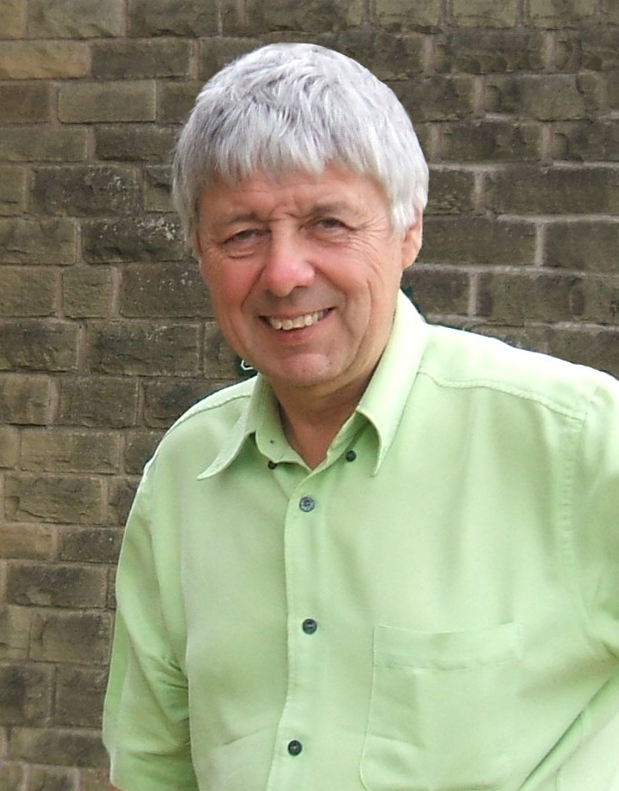
 | some opinion from Huncoat |
A conventional farmer will look at a field and assess the most suitable crop for that field and calculate the financial returns involved. A permaculture farmer will look at a field and assess what ecosystems would be best suited for that land, and would then work out what diversity of crops and thus what range of human needs might be best served with that land. I had come into the hills for some reflection. For me they were the closest thing to wilderness and yet they had along with the entire landscape around me, been reduced to a degraded existence. Gone were the bears, the wolves and the wild boar. Gone were the golden eagles, the beavers and the red deer. Gone were the forests, the flowers and the butterflies. In their place grazed a multitude of cloned sheep. I reflected upon a society that not only sterilised nature, suffocating it with a bland uniformity of industrial production but that also seemed completely unable to stand back and see the bigger picture. It was the end of an era. This land had been managed by a tenant farmer for twenty-five years and during that period had been continuously grazed. A herd of ewes had steadily worked the top soil into a compacted impermeable crust. Wild horses had added to the abuse in recent years. No flowers grew on these fields. Sixty acres of degraded green desert supported little in the way of insect and bird life. The land had been stocked to capacity and had suffered as a result. When the world economy dependent on ever increasing consumption of ever dwindling resources moved into recession twenty political leaders from across the world met in London and declared that they would pull out all the stops, give it everything, $1,100,000,000,000 to get the credit flowing again, to kick start the world economy. And yet it seemed to me they were clinging to an old world perspective: financing mining, meat farming, deforestation, aviation, weaponry, car production and banking. I could not help but see these events in the context of ‘Lammas’ where a small band of pioneers were trying to create a sustainable ecovillage. I sighed in sadness at the madness of it all. We currently live in a society based on the ever-growing consumption of the Earth’s finite resources. We have taken things too far and have caused irreversible environmental damage. Fossil fuels are running out. Precious metals are becoming scarce. Fish stocks are in crisis. Logging of primary forests continues apace. Soil health is in chronic decline. Fresh water is no long widely available. We are in the midst of a biodiversity crash. The climate is changing. Sea levels are rising. Here in the UK we have inherited a landscape fashioned by economic forces and dominated by agribusiness and developers. In the future we need to embrace an approach which is both abundant and biodiverse living lightly on the land. Structures and development need to be low impact farming should work alongside wild life. Permaculture can feed us all. The vision of author Paul Wimbush. Spring 2012. See www. lammas.org.uk/index.htm
|

* They say we need growth to climb out of recession. * They say we need growth to stimulate the economy. * They say we need growth to provide jobs and help the poor. But is this just an easy excuse? A convenient argument to avoid the truth? Or is it simply a scapegoat for something ordinary folk do not understand?
We should try to understand what growth actually means and how it works.
A vibrant economy fostering respectable profits and jobs is vital for the prosperity of any community and civilisation. A steady growth in goods, products and work expands the opportunities for enterprise and rewards, driving progress and creating wealth. Here is the kernel of economic growth.
A false economy based upon the exploitation of novelty consumerism will damage any community or civilisation. It produces erratic growth in ambiguous areas with very little sustainable industry or commerce. It creates inequalities and self only interest retarding progress and lining the pockets of a few. Here is the devil of economic growth.
Politicians, economists and media pundits perpetually promote the merits and essentiality of growth as the main part of the equation in creating jobs and paying for services. But which growth do they mean, the good one or the bad one?
The truth is that the economic growth of the last decade has not served us very well. Most new wealth has gravitated to the already rich or been sucked into the fantasy world of a few celebrities. For the masses an illusion of affluence mushroomed only through credit and debt being freely available to finance spending sprees on luxury gadgets and trinkets. For the poor, well they just stayed poor.
All growth has done recently is accelerate the differentials and increase the gap between rich and poor.
All that the finance and banking sectors do is move money and wealth around, all smoke and mirrors. They do not create real growth. For that we need industry, civil engineering and legitimate services.
Growth is used by cynical leaders to dangle the carrot of increased affluence for all. Growth is proffered as the only way to solve the countries economic problems. Growth will provide jobs, pay for schools and hospitals, protect living standards, get us out of recession and pay off the national debt!
Is that right? Is it the only way? What if all the benefits of growth are again not shared equally?
This Coalition Government’s cuts are made across the board. All sections of the community and economy are expected to share the burden. Yet the responsibility for the economic crisis lies with Government, Bankers and Speculators not across the board. The Coalition Government advocates that cutting public services is an essential part of restoring growth but who will benefit the most? Certainly not those dependent on public services.
How can it be sharing the burden when cuts hit the poor? How can it be sharing the burden when ordinary folk are faced with consumer price inflation whilst incomes reduce? How can it be sharing the burden when gas and electricity prices increase dramatically? How can it be sharing the burden when rich people increase their wealth during a recession? How can it be sharing the burden when High Street companies and Utilities continue to increase profits well above inflation?
And just what is the role of Investors, Financiers and Speculators in all this? Are they more powerful than Governments? Do they exploit the ordinary people of the world and then callously desert them if things go wrong? How can this state of affairs be managed?
Growth cannot be sustained without resources to power it. Our country and indeed the world, has finite natural resources with a fragile ecology upon which we depend for survival. If we are not to further degrade the planet’s ecosystems we need to get cleverer in our use of these resources and find alternative forms of energy and raw materials.
Capitalism and enterprise can stimulate considerable growth if profit is continuously reinvested in new technology, expansion, machinery and capital equipment but if that profit instead is just amassed as personal wealth then it does little for the economy or the exchequer. Then the only road to fairness is that unpopular mechanism taxation!
Life is not fair and nature is cruel but a great leveller. However, human kind ought to strive harder to improve on this and manage civilisation in a fairer and kinder way.
Politicians, economists and media pundits must moderate their promotion of economic growth until they can explain exactly what they mean. They need to be challenged on the meaning and implications of their vision. They need to start telling the truth about their version, their theory, of economic growth!
|
| This is not a manifesto or definitive statement for change but just the thoughts of the Huncoat Branch to indicate what grass roots members are concerned about. It is a flexible working document that can be amended or added to as circumstances change. Some of this Declaration may already be obvious Labour Party policy but we feel it is safer and clearer to include it. It is hoped that it might influence decision makers at all levels and contribute to the revitalisation of the Labour Party. |
| SECTION 1; GOVERNMENT AND POLITICS – Our Country needs transparent and fair Government with no dishonesty or favouritism. The people expect and deserve to be told the truth. They are disillusioned with politicians because of the practice of evading the issue or defending the indefensible because it is pragmatic rather than right. The first Government or individual politician that sticks to stated principles in a straight forward and honest way will gain popular support. The ConDem Coalition made many promises about fairness when they took power but there is scant evidence so far of this being implemented. In fact, they have robbed the poor to pay the rich. They have reduced the standard of living of many ordinary people whilst doing little about the financiers and speculators who caused the crisis in 2008. Instead they just make great play on the great debts and deficit left by the Labour Government using it as an excuse to justify savage spending cuts which are quite arbitrary and ideologically driven. The true lessons of the global economic crisis must be realised and not blamed for everything that has gone wrong. Britain has basked in an economic boom for the last 10 years foolishly fuelled by consumer credit and over inflated property prices which some people predicted would lead to disaster. The traditional values of socialism do not appeal or mean much to people in today’s world. State ownership because of its past reputation for operating inefficiently and not providing all the answers is widely distrusted. Nevertheless, there is still substantial support for the notion that the most vital public services are best entrusted to non profit making collective ownership providing that public funds are effectively used and accounted for with no wastage and embezzlement. Moreover, an unbridled laissez-faire free market economy finds little favour because it puts profit first before safety, value and customer service creating a chaotic rat race where the strongest or most unscrupulous organisations tend to monopolise. We believe that self regulation in commerce seldom works and there should be a general policy of reasonable and accountable watchdog supervision to protect the consumer. Government should be an institution of the ‘Community’ not the ‘State’ leading and working with the people rather than autocratically prescribing what they should do. We should simplify Legislation!” and reduce Government interference. Cut red tape, minimise documentation and small print ensuring that there is no false growth in the economy fuelled by laws, rules and regulations that just provide work and profit for lawyers, accountants and administrators. The party political system needs changing to get rid of the culture of spin and misinformation and prevent any vested interests like powerful National and International Companies or Newspaper Barons from having too much influence or getting covertly involved in Government affairs. Legitimate business advisors to the Government are ok but the deliberate creation of Cabinet posts for non-elected cronies seems wrong. There needs to be serious progress towards more open democracy by examining the need for reform in the following areas which make voters angry. The discredited MP’s expenses arrangements, the Party “Whip” system, constitution and powers of the second chamber (House of Lords), the apparent anomaly of Scottish and Welsh MP’s voting on English only matters, the apparent disproportionate and unfair funding system for devolved Government and the provision for “Elected Mayors”. The electoral system itself needs some reform to discourage apathy and provide proper representation in Government of all majorities and minorities in society. This could well mean bringing in some type of “proportional representation” at all levels of government elections. Consideration should also be given to proportionately limiting what each political party is legally allowed to spend on electioneering to create a level playing field, enable smaller parties to compete fairly and ensure that no faction simply ‘buys’ power. Also, though normal day to day running costs of political parties should continue to be met entirely by their own members or fund raising activities there should be a firm upper limit on large donations from individuals or companies. The best way to raise financial support has got to be by winning the hearts and minds of ordinary folk. |
| SECTION 2; TAXATION – Our Country needs to avoid where ever possible all forms of indirect taxes which are unfair and regressive because they are not related to a person’s income level. The emphasis should firmly be on income taxes and profit taxes providing they are reasonable and re-distributive. Some of the areas that need to be looked at are Council Tax, fuel duty, VAT, costs put on small businesses and the thresholds on stamp duty and death duty. The various tax allowances should always be raised in line with inflation and a sharp focus kept on minimising the overall burden of taxation placed upon the poor. For example, it was a grave political mistake for Labour to remove the 10p starting rate band without comprehending its effect and protecting the most vulnerable. At the other end of the spectrum the low level taxation of the super-rich introduced by the Tories under Mrs Thatcher should be reviewed and pressure stepped up to stop big businessmen evading taxation and to minimise the advantages of off shore tax havens. It cannot be right that wealth accumulated from this country avoids taxation. |
| SECTION 3; RE-DISTRIBUTION OF WEALTH – Far more still needs to be done to reduce the gap between rich and poor promoting a sense of perspective and code of values. Global pressures, market forces and Government intervention have led over recent decades to a widening of disparities. A sense of perspective needs to prevail – for instance the ConDem Coalition are seeking to make fraud and error savings in welfare benefits of only £1.6 billion whilst doing little to clamp down on tax evasion worth £120 billion. Moral responsibility and self regulation are unlikely to ever produce a fair distribution of wealth, the powerful and unscrupulous will always try to acquire more than a justified share. The value of each person to society ought to be better determined aiming for a reasonable differential between the highest and the lowest. Although genuine hard work, enterprise and skill still need to be fairly rewarded the worst excesses of high earnings, easy bonuses and vast company profits ought to cease. Ordinary working people on levels close to the National Minimum Wage are incensed when they see how top executives, entertainers and footballers etc are rewarded. The right example needs to be set and sensible proportions applied. Mutual fairness would be beneficial to all. This might be assisted by raising the Minimum Wage to a respectable level whilst at the same time advocating some kind of Maximum Wage. Also, pay increases as a percentage should be avoided in preference for the same flat rate for all grades and any pay policy made legally binding across the board instead of just making an example of vulnerable easily controlled groups. Pensioners and the poor should be more honestly protected from the true level of inflation instead of using the unrepresentative headline indexes like RPI and CPI. |
| SECTION 4; ECONOMICS* – Government management of the economy needs to come under some close scrutiny. In particular the reliance placed upon economic growth to relieve poverty. Every society clings to a belief by which it lives. Ours is the belief in economic growth. For the last five decades the pursuit of growth has been the single most important policy goal across the world. The global economy is almost five times the size it was half a century ago. If it continues to grow at the same rate the economy will be 80 times that size by the year 2100. This extraordinary ramping up of global economic activity has no historical precedent. It’s totally at odds with our scientific knowledge of the finite resource base and the fragile ecology on which we depend for survival. And it has already been accompanied by the degradation of an estimated 60% of the world’s ecosystems. For the most part, we avoid the stark reality of these numbers. The default assumption is that – financial crises aside – growth will continue indefinitely. Not just for the poorest countries, where a better quality of life is undeniably needed, but even for the richest nations where the cornucopia of material wealth adds little to happiness and is beginning to threaten the foundations of our wellbeing. It is only human nature for individuals to aspire to make a quick buck with the hope of being able to sit back on their laurels and relax or retire; for life is short and no one wants to spend it all in hard work but for the human race as a whole this policy is just not sustainable. The modern economy is structurally reliant on economic growth for its stability. When growth falters – as it has done recently – politicians panic. Businesses struggle to survive. People lose their jobs and sometimes their homes. A spiral of recession looms. Questioning growth is deemed to be the act of lunatics, idealists and revolutionaries. But question it we must. The trust in growth has failed us. It has failed the two billion people who still live on less than $2 a day. It has failed the fragile ecological systems on which we depend for survival. It has failed, spectacularly, in its own terms, to provide economic stability and secure people’s livelihoods. In these circumstances, a return to business as usual if we come out of recession should not be welcomed. Prosperity for the few founded on ecological destruction and persistent social injustice is no foundation for a civilised society. Growth has delivered its benefits, at best, unequally. A fifth of the world’s population earns just 2% of global income. Inequality is higher in the OECD nations than it was 20 years ago. And while the rich got richer, middle-class incomes in Western countries were stagnant in real terms even before the recession. Far from raising the living standard for those who most needed it, growth let much of the world’s population down. Wealth trickled up to the lucky few. Continued expansion of credit was deliberately courted as an essential mechanism to stimulate consumption growth. The economic crisis is not a consequence of isolated malpractice in selected parts of the banking sector. If there has been irresponsibility, it has been much more systemic, sanctioned from the top, and with one clear aim in mind: the continuation and protection of economic growth. Prosperity with fairness depends on our ability to flourish as human beings – within the ecological limits of a finite planet. An essential prerequisite for a lasting prosperity is to free people from the damaging dynamic of novelty consumerism and provide opportunities for sustainable and fulfilling lives. We can take the first step towards achieving this by increasing financial and fiscal prudence and investing in productive jobs, worthwhile assets and sound infrastructures. |
| SECTION 5; BUSINESS – Private enterprise needs a liberated environment in which to flourish with fair scope for healthy profits but this should not be at the expense of customer or employee exploitation. It is unfortunate that the country has lost so much of its manufacturing base relying perhaps too heavily on banking, insurance and service industries to earn wealth. Often this is not real wealth but merely money being moved around. We need to work to redress this imbalance. A few decades ago Governments and the media were concerned with the ‘trade gap’ this never seems to be mentioned now although it must still be important? Instead we are harangued about the national debt and the annual deficit because they are of interest to financiers and investors! Their action governs the value of our businesses and currency which limits the liberalisation of enterprise and government. It may not be easy to wrench this power back but the effort should be made. Moreover, these measurements of national economic performance are a bit artificial. It is only really the Government that is in debt or deficit which is largely dependent on its own ability or willingness to economise on spending or sequester the appropriate funds through taxation. This country is still wealthy and much of the government’s debt is owed to millionaires and organisations in this country. So the reality is that despite recession, financial crisis and cut backs the wealthy are still milking the system at the expense of ordinary working people and big business tycoons and chief executives can still seem to command astronomical salaries and bonuses. The differentials in commerce have lost all sense of ethics and proportion. Customers are frequently exploited instead of being served. Pricing structures, product labelling and model descriptions frequently seem deliberately designed to confuse. Then there is built-in obsolescence so that products do not last and need to be replaced. Nothing can be repaired anymore. When it fails it has to be dumped and a new model bought. Or the constant flow of ‘new and improved’ items that play on human nature to desire the latest version. We are locked into a novelty consumerism that is not sustainable. |
| SECTION 6; NATIONAL INSTITUTIONS – Many things wrong within our national services like the NHS, Police, Justice and Education system need to be addressed by sorting out standards, minimising bureaucracy, reducing the reliance on ‘targets’ and questioning the drive for privatisation. Universal and reoccurring problems like hospital hygiene, management of finances and the high cost of drugs need to be properly dealt with. The deceptive culture of “Choice” with contrasting standards of service and treatment between different regions must be rationalised with free personal care being made available to every sick, disabled and infirm person anywhere that needs it. The reliance on privatisation in health and education must be carefully questioned as these services are too vital and sensitive to be entrusted to the risks of profit making organisations where the operation of a free market means there must be winners and losers. PFI schemes like Foundation Hospitals, Polyclinics and Academies should be scrupulously reviewed; every school and hospital should be up to the mark, not just selected institutions. The aim should be to encourage all education to be secular with any special subsidies, tax breaks or charitable privileges for private and faith schools being entirely fair, justifiable and ethical. Also, the matter of the ConDem Coalition injustices in Student Tuition Fees will need to be unravelled. It is very worrying for students completing their studies to be saddled with large personal debts. |
| SECTION 7; HOUSING AND ENERGY - The country needs secure, affordable and sustainable homes and energy supplies. More emphasis is needed on ‘social housing’ with special provision for first time buyers as decent homes for them are often unaffordable. Moreover, the housing market is awash with rogue landlords, rent arrears, evictions, poverty and homelessness. The energy crisis has been going on since 1972 and 4 decades should have been long enough to find alternative secure, affordable and sustainable resources to end the reliance on volatile priced oil and gas supplies. The vast expansion in wind turbines might only ever provide a token part of the answer and more needs to be done to research, promote and provide new technologies like biofuels, solar energy, ground heat source, wave energy, tidal energy, clean coal and nuclear energy. The British Government has an inherent duty to look after its citizens, ensuring that they have secure, affordable and sustainable supplies of homes, food and energy. The possible nationalisation of utilities such as electricity, gas, water, telecommunications, banking and mail should be examined to see if they are affordable and beneficial. Quangos like the Highways Agency, Meteorological Office and Ordnance Survey need to be reformed or abolished for they have ceased to serve the nation properly, they have become remote, arrogant and self justifying, unanswerable to any effective watchdog. The official policy on waste management leaves something to be desired. Not enough business and industrial recycling is being encouraged. Charges for landfill lead to fly-tipping. Environmental care is haphazard with little progress being made on litter, river pollution, dog fouling and general dereliction. |
| SECTION 8; DECENT SOCIETY – We must work harder to get the morals and values in Society right aiming for honesty and integrity in adults and respect in children. This means starting right at the top with all iconic people like politicians, royals and stars; expecting them to address their personal standards and code of conduct by setting the right example of morality, honesty and integrity. There ought to be an open and careful review of the criteria for awards under the National Honours Scheme aiming to improve transparency and public confidence in the system. There should not be rewards for bad behaviour. Then work down in Society to try and modify the apparent endemic British attitude of bad manners and poor scruples which it is highly likely are contributing to problems like gun crime, knife crime, violence and anti-social behaviour. At the same time it is vital to recognise that deprivation and unfairness drive crime, vandalism and hooliganism, that in a society low in ethical or religious restraints the lack of discipline may lead to lawlessness and a breakdown in mutual respect and that boredom, lack of goals, lack of motivation and lack of opportunity fuel alcohol and drug misuse. Such things will never be effectively curtailed by the full weight of the law and punitive restrictions on human rights, the causes need to be addressed right back at the roots where low standards and bad behaviour first begin. We must somehow improve discipline and behaviour in children and ensure respect for adults. Basic standards, morals and social skills need to be instilled early in life. Modern alternatives must be found to replace past community and character building schemes that have declined. A good start in this direction might be made by making much more provision for youth clubs, sports clubs, fitness and exercise activities free (or at least at the lowest cost practicable) for both participants and spectators. |
| SECTION 9; A RESPONSIBLE MEDIA – We need to find democratic but persuasive ways on ensuring high standards of honesty and morality in broadcasting, computer games, advertising and journalism. All sections of the entertainment and news media should set a high standard of good taste and opinion favouring material that promotes virtue rather than the dark side of human nature. Without resorting to censorship, we need to promote concepts that nourish integrity, artistic flair, individual endeavour and sportsmanship and discourage the inclination towards excessive inclusion of bad behaviour and shocking depiction of violence and death. For example; perhaps too many films and TV shows rely on depressing subjects like war and crime or detective and spy thrillers to achieve audience ratings? Though these may prove popular they are, along with all the reality TV not a good example to society and tend to foster the dumming down of values and public decency. There is also rather too much reliance put on special effects to grab attention and impress the audience and far too many repetitive browbeating trailers for future programmes. The important role of news and current affairs media brings a great responsibility to give impartial and balanced coverage to all points of view allowing equal right of reply to anybody attacked or criticised. This is not always respected and in many instances is just a cynical vehicle for the promotion of a particular editor’s bias or presenter’s ego, eg Andrew Neil on BBC’s Daily Politics and Rupert Murdoch’s malign power through News International, BSkyB tv and the Times newspaper. Also care and answerability is needed where there is likelihood of spreading unnecessary alarm and misinformation. “The News Bulletin must not lead or make the news!” Commercial advertisements should avoid deception and spin in their presentation and not insistently promote products that might be harmful to health, encourage bad behaviour or excessive consumption. Junk mail should be discouraged and all disclaimers, small print, contracts and charges for services, energy, utilities and goods must be truthful, transparent and comparable like for like. The food and drink industries should be restrained from marketing and promoting cheap booze and fast food to young people or targeting vulnerable sections of the community. They should also be expected to help deal with the litter and chewing gum problems they generate and profit from. |
| SECTION 10; NATIONAL AND INDIVIDUAL SECURITY – We must seek to strike the right balance between assuring national security, managing immigration, controlling discrimination and administering imprisonment whilst still upholding civil liberties and respecting human dignity. We must make sure we have a fair immigration system allowing anybody admission providing they satisfy reasonable criteria on health screening, can speak or are willing to learn English, be self supporting, contribute to our economy and be law abiding integrated members of society. There should be energetic measures to eliminate all forms of discrimination, to prevent further development of a negative public attitude towards ethnic members of society and the authors/perpetrators of such attitudes adequately deterred and sanctioned. Violent criminals and dangerous mental patients must not end up back in society because of inadequate space in prisons, hospitals or institutions unless full and effective community care is provided for them. Most petty crimes should not warrant a prison sentence but just supervised community service instead. There is much work offenders can be channelled into doing like litter picking and general maintenance. Lessons need to be learnt from the phone hacking scandal and the Police held more accountable for their failure to properly investigate crimes. Public confidence in Government enquiries like Hutton and Butler must be improved through transparent integrity. |
| SECTION 11; TRANSPORT – Much more needs to be done to rationalise the transport infrastructure. Railways, roads, bus services and traffic management all need further development. A robust national transport infrastructure should strike a healthy compromise between efficient public transport and adequate roads to serve both business traffic and the private motorist but with more bulk and heavy freight transferred to rail. Rail and bus operations should be seen as a public service not as a profit opportunity for all sorts of audacious entrepreneurs so measures to take them into full regulation or even nationalisation if economical should be kept under review. In a modern civilised society it is a reasonable human aspiration to possess a private personal transport mode and it would be unrealistic to expect everyone to use public transport. We need to avoid the clichéd opposition towards personal motoring which seems to foster the idea that it is some kind of anti-social behaviour causing pollution and congestion. The Authorities should recognise that traffic flow problems have multiple causes and apply genuine research into finding the remedies. New roads, generous parking spaces and efficient junction layouts are a vital component of the local infrastructure and it will not mean covering all the countryside with tarmac and concrete. If any new building development is to be considered justified then adequate road and parking provision must be part of the plan. All major motorway and trunk road intersections/junctions should be served by low charge or free “Park and Share” schemes. Parking charges at hospitals, railway stations and airports ought to be minimal just to cover the costs of providing that amenity and not be exploited as a revenue earner. All speed camera, congestion charging, bus lanes, cycle lanes and traffic calming schemes need to be carefully audited to check that they are the right balance between safety and efficiency, enabling traffic to still move at a sensible speed. It is illogical that local authorities sometimes have money to create restrictions but not enough to repair or improve the road! There also needs to be a comprehensive audit of the bourgeoning incidence of total road closures for repairs, safety checks or accidents with consequent long and aggravating diversions. |
| SECTION 12; THE EUROPEAN UNION – The country must resolve the issue of being in the EU and work to ensure that it’s rules and administration are fair and effective. Most people appreciate the need for the country to be part of some kind of trade and financial affiliation like the European Economic Union as a necessary compromise for competing in the world market against large and powerful countries like the US, Russia, India and China. However, the electorate should still be given the referendum they felt they were always promised on the Reform Treaty as not to do so will further undermine their distrust of politicians. There is a general consensus that it is hardly any different than the failed Constitution so it should be reinterpreted and the facts presented as simply as possible. |
| SECTION 13; FOREIGN POLICY – Our Government, national organisations and companies must be expected and pressurised into behaving entirely ethically in trade and political dealings with other countries and cultures. This means practising “Fair Trade” with the utmost integrity, genuinely helping third world countries to tackle famine and health problems like HIV/Aids and genuinely trying to progress nuclear disarmament and minimise the military arms trade. It also means limiting military action to purely defensive or humanitarian grounds which is approved by Parliament and the UN. |
| SECTION 14 ORGANISATION OF THE LABOUR PARTY– Grass root opinion seems to have been sidelined whilst Labour was in Government because the leadership made the decisions not the membership.
There is a desperate need to restore democratic powers to members. The party organisation might need some radical change to properly reflect the views of all its members and strengthen their role in policy making. Conference should be a forum for debate rather than controlled deference and in which disagreement is welcomed as a sign of a healthy body politic rather than just a sinister threat to the party leadership. The issues of a Labour Party Ombudsperson, a Charter of Members Rights and establishing a code of ethics should be carefully considered. There needs to be improvement in the systems for nomination and selection of candidates, protocols at Conference and relationships between all tiers from Branches through to CLPs, Regions and HQ. Safeguards are needed to ensure that in future no powerful individual or unrepresentative faction can hijack the Party. For instance, the policy of all women short-listing can appear discriminatory and undemocratic therefore a better procedure should be sought. During the years of Tony Blair and Gordon Brown the working class felt neglected in favour of the middle class. Little was done to change basic unfairness in society, discourage greed or reduce corruption and exploitation. There has clearly been a loss of voter confidence due to past mistakes in Government and a new direction with inspired leadership is vital to reconnect with the people. |
| *Acknowledgement; some of the material in Section 6; Economics is adapted from the booklet “Prosperity Without Growth” by Tim Jackson, Economics Commissioner with the Sustainable Development Commission. |
Site Map |
|